Showing posts with label game changing technology. Show all posts

Saturday, March 04, 2017

Facing a future of technologic wonders: Artificial Intelligence

Don't be demoralized; we've faced waves of anti-science mania before. Today, let's assume we decide to resume being a boldly confident, ever-ambitious, scientific and technological civilization, in which children believe they can be better than their parents... but parents make that goal hard to achieve, in the best way, because we're improving too!

Okay then, consider some innovations that will change the world: Artificial intelligence (AI), hyperimaging, macroscopes and smart sensors are some of the biggest innovations that will help change our lives within five years. 


Take super-vision (giving us all real time access to vast swathes of spectrum), democratized access and tools to analyze Big Data, early disease detection, and advanced chemical sensors letting us sniff everything from pollutants to pheromones. And all of it in our phones.

Credit: Forbes
Forbes offers an exploration of the Top Ten Hottest Artificial Intelligence Technologies, including machine learning platforms, deep learning platforms, natural language generation, biometrics, text analytics, speech recognition, and decision management, among others. The chart (shown here) compares the anticipated trajectories toward progress on each of these fronts.

One measure of our progress toward AI is... poker, one of the hardest games to master, for it requires extensive game theory, and decision-making in the face of uncertainty.


The Great A.I. Awakening: Gideon Lewis-Kraus offers up an insightful exploration of one branch of Artificial Intelligence -- the blossoming field of machine learning via evolving neural networks -- by showing us how Google Brain completely transformed the field of Language Translation in 2017. Articles like this one are why the new president had better be wrong about the "failed" New York Times.


AI may be key to 'future proofing' our power grid, monitoring smart meters and sensors, ensuring resilience and the ability to deal with changing demand -- or the occasional crisis. 


AI will also revolutionize healthcare, improving the accuracy of diagnoses and recommending treatments. See how IBM Watson is advancing cancer care. AI can now identify skin cancer as well as a trained doctor. 


Oh, but what about our dark-side fears? Members of the European Parliament have sought to require that developers of robots both explore what kinds of rights the most advanced versions might earn and provide “kill switch” capability to prevent machine beings from harming humans. A capsule view of our society’s lovely ambivalence, wanting to be simultaneously ethical, successful and safe. 

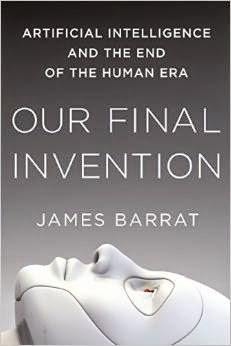
As we head into our robotic future... John Markoff's new book: Machines of Loving Grace: The Quest for Common Ground between Humans and Robots, considers some of the tough issues we will face in integrating these developing synthetic beings into our daily lives. An issue also explored by James Barrat in Our Final Invention: Artificial Intelligence and the End of the Human Era.

(BTW I was at Caltech and took a class with Richard Brautigan, when he was a visiting lecturer and wrote his great poem "All Watched Over By Machines of Loving Grace.")

Is AI ready for prime time? I'm sure most of you have seen the buzz around a bizarre "conversation" between two Google Home units. It's okay. This will be why the last few humans will be kept around. To talk to each other while AIs laugh! In fact, right now, at this moment, they might be tracking your eye movements as you read... 

Along similar lines, we just attended a performance of the play Marjorie Prime, which touchingly strokes the poignancy of creating AI shadow duplicates of lost loved ones. The upcoming film, starring John Hamm and Tim Robbins, will likely add gunfire, alas.  Still, maybe it will be more like the lovely film Her.


== How do we balance technology with human needs? ==

Here's a deeply disturbing tale about how we may be way over-reliant upon the digital age, which might be wiped clear of knowledge at any moment.  In Vernor Vinge's near-future science fiction novel Rainbows End, the librarians at UCSD's Geisel Library put the entire book collection through a glorified wood chipper in order to digitize them. But at least in Rainbows End they saved the content of the books. This ... on the other hand, came from one commenter:  “Over the summer, workmen removed most of the remaining books from our Science and Engineering Library at the University of California at Santa Cruz. Roughly 80,000 books, worth between $2 - $6 million were destroyed or shipped off campus to distant storage facilities.”  Yipe.


How will technology further fully integrate into our world... and utterly transform our daily lives? The Fourth Transformation: How Augmented Reality and Artificial Intelligence Changes Everything, by Robert Scoble and Shel Israel provides penetrating insight into the overwhelming changes ahead for business and commerce, as well as education, entertainment, medicine and personal interactions, as AR, VR, the Visual Web and haptic technology become indispensable to our lives. 

Amazon, Google, Facebook, IBM and Microsoft have joined to establish Silicon Valley's new Partnership on AI to examine the ethics of Artificial Intelligence and ensure the trustworthiness and reliability of AI technologies.


In what could have been the biggest news in this roundup: at the Beneficial AI 2017 conference, January in Asilomar, California, 100+ AI researchers sought to formulate principles that might help to keep artificial intelligences benign and beneficial.  A good start… 


...though at a glance I can tell the statement is missing several elements, alas.  Their role model -- in 1975, the Asilomar Conference on Recombinant DNA was held to discuss potential biohazards and regulation of emerging biotechnology. The best-practices recommendations that emerged then provided important guidance to generations of researchers, lowering risk while not impeding research. The conference on AI offered guidance that seems too abstract and gap-ridden, alack.

A very long but rewarding essay by one of Bell Labs’ finest, about what it takes to be truly creative and productive… at least in some industry where inventiveness must be pragmatic and productive, blending individual inspiration and ambition with teamwork and good leadership….

… of the sort that made the U.S. the center of world productivity and progress… til the rise of a new confederacy.

== And yes, it comes around to politics ==

You thought I could do a science roundup without mentioning the War on Science?  How, when science itself - along with every single profession that deals in factual knowledge - is under direct attack?

For example, denialist cultists have long spurned expert advice on Climate Change. "We need more data before deciding what to do!" or "The jury is still out!" While simultaneously eliminating satellites , instruments and data that could reinforce the overwhelming evidence of our own eye. But at least under the Bushites, science was sabotaged less spectacularly and openly. 


Their solution is that of a 3 year old: "If we don't look at it, the problem doesn't exist!"

The victim is no longer science. It is your children.

Tuesday, December 20, 2016

Challenges and Changes

Setting aside detailed politics, for now... but not the underlying issue...

Now that intellect and curiosity are threatened species in America, let's all nurture them wherever we can. One method: I often dip in to give brief answers to the curious on Quora. We’ve collected some of these queries - and my responses - on my secondary (Wordpress) blog. I explore questions like... “What has been the impact of science fiction books on readers?” and “Can you name a concept that is rarely explored in science fiction?” and ‘What are some science fiction novels with a memorable protagonist?
Others are trying to come up with answers. For example: the Breakthrough Prizes celebrate the bold accomplishments of scientists as if they are rock stars… and with generous Silicon Valley funding, plus Morgan Freeman presenting, they seem on track! (Though they've got a way to go, when it comes to red-carpet fashion allure, during the photo sessions.)

In this fascinating look at the last one thousand years, Ian Mortimer’s book Millennium: From Religion to Revolution: How Civilization Has Changed Over a Thousand Years offers big-idea perspective on how far we have come, especially by developing new tools as well as a vigorously open society. And science. He writes, "The most significant changes are experienced when society is forced to deviate from its entrenched patterns of behavior."  This review is worthwhile in its own right. Mortimer looks at the tremendous challenges we will face to survive the next millennium.  Or the next few years.

Case in point: see the giant new containment shell that the Ukraine is slowly sliding into place to cover the fast-decaying concrete “sarcophagus” protecting Eurasia from the poisons inside the Chernobyl reactor.


== Potential game changers ==

Researchers  have created a device that absorbs carbon dioxide from the atmosphere and uses sunlight to break it into a mix of carbon monoxide and hydrogen called synthesis gas or “syngas,” that can be used directly or turned into diesel or other liquid fuels. Yeah. Saw this a couple of years ago. Note that this is not so much a plausible way to put a dent in atmospheric carbon. Fact is, the same solar energy, fed into the grid, would prevent CO2 emissions in the 1st place.

It is a potentially useful item, but more to provide fuels for outposts and military use. Also, this tech may be useful on Mars! Some call it an “artificial leaf,” using a special catalyst - tungsten diselenide - and sunlight.  We’ll see. But I rank it as a helpful game changer.

Here's another: A mild electric current combined with an antibiotic can kill multidrug-resistant bacteria by helping the antibiotic to cross protective biofilms. Zaps of electricity may also prove helpful in jumpstarting the blood clotting process to heal wounds.

Remember the Horta, in Star Trek:TOS? An alien creature whose biology was based on Silicon, which has a chemical bonding structure similar enough to carbon that science fiction writers have speculated for a century about alternate biologies.  Alas, there is no simple silicon molecule that merges well with a convenient liquid, like water, nor one that has carbon’s vast flexibility in bonding.

Still, rejoice, fans of diversity!  Researchers managed to coerce an extremophile bacterium to use an enzyme that could catalyze silicon–carbon bonding — if fed the right silicon-containing precursors.

Veering semi-randomly, but optimistically, access to mobile money was influential in lifting 2% of Kenyan households out of poverty -- particularly empowering female-headed families.

== Challenges on the weather front ==

This is the second year in a row that temperatures near the North Pole have risen to freakishly warm levels. During 2015’s final days, the temperature near the Pole spiked to the melting point… It’s about 20C [36 degrees Fahrenheit] warmer than normal over most of the Arctic Ocean…  “It will be fascinating to see if the stratospheric polar vortex continues to be as weak as it is now, which favors a negative Arctic Oscillation and probably a cold mid/late winter to continue over central and eastern Asia and eastern North America.” Watch. Our neighbors who are waging war on science, and every other fact-profession, will shiver and proclaim that their misery proves that nothing is changing.

U.S. Energy independence - one of the Obama Administration's specatcular braggables - has come in the short term from vast new supplies of natural gas... but ultimately depends on the same thing that might save us from the worst ravages of climate change… new technologies for sustainable energy and efficiency and storage.  All of which were blocked, relentlessly but (thank God) ultimately futilely by certain political factions.  Still, we are going to need oil and gas for some time.  And the best transition is one in which America and the West are fully independent from sources in unstable and unfriendly parts of the world.

Well, unfriendly to our civilization and enlightenment, though not to the incoming administration.

In other words, the stunning hypocrisy of those who blocked sustainables, thus keeping us tied to the Persian Gulf ten years longer than we needed to be.  In sharp contrast, note that it was during President Obama’s tenure that we regained independence and gas prices plummeted. (The U.S. has produced more oil and natural gas than any other country every year since 2012.)

In any event, it is a good thing that now it seems that new oil and gas discoveries in Texas will make this bridge of independence secure.  

The even gooder thing?  U.S. Sets Staggering Record with 191% Growth in Solar Power Installations in 2016. In other words, twits, you have failed.  We smartypants will save the world for you, despite you.

==Though smart folks aren't always right ==

The other side, while far more sapient, still has its fetishes and complexes.  Like a prudish utter-refusal to consider a Plan B, to supplement, in case efficiency and sustainables prove insufficient, by themselves.

Of all the schemes to ameliorate climate change through “geo-engineering,” the one with the greatest mix of plausibility and controllability is Ocean Fertilization. Most attention has been applied to adding the key missing ingredient… powdered ironHow dumping iron in the oceans can help fight climate change.

But the concept should be viewed more generally. Essentially you are talking about adding a little land to fertilize water.

This is exactly parallel to humanity's ancient trick: adding water to dry land in irrigation.  With almost identical advantages and failure modes!

Think. When you irrigate a region by adding water from mountain sources to flatlands with poor drainage, you are creating a recipe for long term disaster. Salts build up and you make a desert. On the other hand, when you add water to land and there’s good drainage? Well, there are places on Earth where irrigation has been practiced for thousands of years, without much harm. Drainage is key.

As for the reverse? Adding land to water? Well, minerals washed out to sea by weathering are precisely the way our planet maintains her “Gaia Balance” against the CO2 released by volcanoes and living ecosystems. That and upwelling currents that stir up ocean-bottom sediments. Both fertilize the 20% or so of the oceans that are filled with life. (The rest, that don't get nutrients, are vast ocean "deserts.") It's the same deal. “Adding land to sea.”

We are already doing this, big time, with agricultural runoff, and when this effluent spills into bodies of water with poor circulation – the Caribbean, Mediterranean and especially the Black Sea – then eutrophication and de-oxygenization can spread death, as when you irrigate a region with poor drainage, ashore. But when nutrients are added to fast and broad ocean currents – as happens at upwelling zones off Chile, South Africa and the Grand Banks, the result is a fecund burst of life, a vibrant food chain. And, incidentally, some carbon removal from the atmosphere. The magnitude of the latter is under dispute, but even if it is zero, isn’t the experiment worth trying?  If only to get more fish?

Not according to zealous purists, who fear that any form of geo-engineering, no matter how inherently controllable or plausible, is anathema – even the bottom stirrers I described in Earth, that merely boost what nature already does. Why oppose even small scale experiments? Pure prudishness, Because the activists assume that any such efforts might reduce our passion to save the world by reducing carbon use.

Such contempt. See The Unpersuadables: Adventures with the enemies of science by Will Storr.  Such zero sum thinking. The liberal-smartypants-progressive wing does contain some unreasoning, reflexively sanctimonious cretins, and these helped to propel Trumpist reaction.

Just let's be clear. One side contains some preachy flakes.  The other consists... but I was going to put that aside. For today. 

 == Fascinating lagniappes! ==

This sparrow acts like it has four sexes. Because a chromosome flip created a second set of “sex” chromosomes, beyond the XY pair. One individual in this species can only mate with one-quarter of the population. There are very few sexual systems with more than two sexes.”  No other species was known to have one set of fully operational sex chromosomes and another pair that subdivided the species again on another aspect of mate choice. 

Researchers managed to remove most of the C-14 from graphite blocks storing radioactive waste, and turn it into electricity-generating diamonds.  The nuclear diamond battery is based on the fact that when a man-made diamond is exposed to radiation, it produces a small electric current. According to the researchers, this makes it possible to build a battery that has no moving parts, gives off no emissions, and is maintenance-free.  Though current and voltage levels are low, this is a perfect source for science fictional scales of time. Because C-14 has such a long half life, the researchers estimate a diamond battery would still generate 50 percent of its capacity after 5,730 years.  Wowzer!

Oh, a final Brin-note. The 3rd issue of the i4is journal Axiom from the Institute for Interstellar Studies is now out and it features “an exclusive article by the world-renown science fiction writer David Brin about artificial intelligence: "How Might Artificial Intelligence Come About: Different Approaches and their Implications for Life in the Universe." You can order the issue here.  

Wednesday, September 16, 2015

Looking ahead...Signs of change

The Arthur C. Clarke Center for Human Imagination at UCSD held "The Physics of Free Will" a panel discussion on August 6th. Astrophysicists Brian Keating, Andrew Friedman and David Brin discussed what modern physics – including “entanglement” and the time-history of inflation and the Big Bang -- has to say about the concept of free will, including perspectives from the foundations of quantum mechanics, cosmology, and speculations about the role of of conscious observers in the cosmos.  Now the whole event is available on YouTube!

Stay tuned for a smorgasbord of cool items. But first...

Is Science Broken? No. But some science journalists are deeply dishonest

Is Science Broken?” Certainly there are those who proclaim that from the rooftops, seizing on every anecdote of misbehavior by individual researchers as evidence that science itself cannot be trusted to keep its own house. Elsewhere, we discuss the varied reasons for a “war on science.” But certainly some problems originate within. Over at Five-Thirty-eight, a recent article by Christie Aschwanden describes why some of the very same statistical methods that were developed to separate cause-effect from mere coincidence make it very hard to prove particular conclusions – especially in social science. The essay is worthwhile and offers up some cool interactive demos of statistical tradeoffs… 

… and yet, the author unwittingly exemplifies her own complaint, to a stunning degree, in her very first example, an interactive that purportedly shows how the same data can be manipulated to show either democrats or republicans are better for the economy. Either or neither.  How interesting that she would have chosen that as her first case.  And how convenient, since that lesson is the one readers will take away.

In this case, the tendentious effect is easily exposed, as the “party effects on the economy” graphic only lets you compare raw, yearly figures for GDP or employment or inflation, when these all react sluggishly to changes in policy, especially if it takes six years to drag the nation out of a pit the previous administration created. It is the direction and rate of change of those metrics that actually reflect outcomes from policy moves. For example, if one party takes inherited surpluses and leaves the nation diving into steepening deficits, and the next one starts to pull us out of the dive, it is idiotic or else deeply dishonest to make Total Current Debt the metric.

Even more telling is the second derivative of economic factors like public debt. The rate of rate of change has much more immediate effects, far more blatantly attributable to a party’s policies during its span in power… as I show here. And when you use such metrics all ambiguity vanishes. One party is responsible and effective while the other is absolutely and always devastatingly harmful.  

Let’s give the author the benefit of the doubt.  Perhaps she is simply finger-wagging scientists, while falling for mistakes they’d catch as freshmen.  

== Looking ahead -- signs of change ==

See this: 13 ways that Science Fiction's Vision of the Future is Closer than You Think -- with innovations in space habitation, teleportation, touch screens, quantum computing, artificial intelligence, virtual reality, autonomous cars... and more!

The next candidate for “flying car”? The Terrafugia TF-X is – or maybe will be -- capable of vertical take-off, thus negating the need for a runway. Wings furled, it’ll squeeze into a standard single garage, thus negating the need for a hanger. Riiiiight. 

While the Tricorder X Prize tools along toward creating an inexpensive – Doctor (McCoy) in a Box… the Chinese firm Baidu hopes to provide a service letting folks anywhere interact with AI and assess 520 different diseases, representing upwards of 90 percent of the most common medical problems nationwide. 

Take a look at: Twenty-five fascinating mega projects taking place across the globe, including the Panama Canal expansion, the Three Gorges Dam, the underwater Marmaray Tunnel in Turkey, Jubail Industrial City in Saudi Arabia, Liuchonghe Bridge in China and other bold projects!

Six people shut themselves inside a dome in Hawaii and plan to stay for a year. It's a mission funded by NASA to explore what it's like to send manned missions into deep space.

Artificial photosynthesis could power homes in a few years, mimicking plant-based photosynthesis by using solar energy to convert water into hydrogen. If cheap nickel catalysts can be used… and 22% efficiency holds up… then toss it onto the pile of potential game-changers. Ah, but that pile had better be producing, big-time, soon. 

Because. The latest report from the National Oceanic and Atmospheric Administration has determined that globally, July was the hottest month since record keeping began in 1880. And ocean acidity -- which CAN only have one cause -- is rising.  See the shrinking of Arctic ice through years of National Geographic maps. The Himalayan glaciers that slake the thirst of a third of the world’s population are rapidly retreating. And the denialist cult keeps getting more frantic.

Just a few years ago, one of the cult incantations was that solar and sustainables were “pipe dreams.” Now? The world now gets over 1% of its electricity from solar power! Currently, global solar capacity is 178 gigawatts Crossing the Threshold The world now gets over 1% of its electricity from solar power. Currently, global solar capacity is 178 gigawatts. The U.S. now ranks second worldwide in wind power…

One of the major talking points of opponents of sustainable energy is that if you include fixed manufacturing costs, solar and wind are not competitive with fossil fuels. These opponents used this rhetoric to stymie investments in sustainables R&D during the first decade of this century.  But rates of efficiency have been skyrocketing and costs plummeting.  One of the big solar module manufacturers, Trina Solar, said costs had fallen 19 per cent in the past year alone(!), and would continue to fall by at least 5 per cent to 6 per cent a year in coming years as efficiencies were improved.  This study shows that renewables turn out already to be cheaper than fossil fuels.

== and... ==

Researchers from MIT revealed they've produced a "better, cheaper, more user-friendly" printer that can print using 10 different materials at the same time. "Multifab" self corrects by watching its own actions. They claim it can scan case around an iPhone you place in the printer

We keep reporting “possible game changing” technological breakthroughs. This one sounds a bit less plausible than some.  Yet potentially cool. Imagine that the trend toward using carbon fiber as a construction material – from planes and ships to cars and even buildings – creating a huge demand for the stuff.  Now envision that we get the carbon feedstock from Carbon Dioxide taken out of the air.  Hmm, well breaking oxygen bonds takes real energy. And a team at MIT thinks they have the problem licked, using lithium. Their novel electrochemical process sequesters carbon in the form of a versatile building material. 

Alas, even if this works, it would only put a dent in atmospheric CO2, as shown in this appraisal, which shows “that capping global warming at 2 degrees Celsius requires removing 1.8 billion tons of carbon from the atmosphere yearly from now until 2100—a tall order that exceeds the capabilities of current technology.” 
  
Boston Dynamics is at it again, creating robots that walk with creepy-amazing skill through natural obstacle courses… only this time it’s a biped!  

Batteries for a new age? MIT and Samsung researchers have developed a new approach to achieving long life and a 20 to 30 percent improvement in power density (the amount of power stored in a given space) in rechargeable batteries — using a solid electrolyte, rather than the liquid used in today’s most common rechargeables. The new materials could also greatly improve safety and last through “hundreds of thousands of cycles.”  

Researchers at CERN find that within about one part per million, antimatter and matter behave in the same way with respect to gravity. And have the same charge-to-mass ratios. Okay, check that off my list of worries.

Finally...a recent typhoon hit Taiwan with winds that lifted a 747 off the ground

Monday, April 27, 2015

Potential Game Changers for the Near Future


Chinese scientists have reported editing the genomes of human embryos. “Some say that gene editing in embryos could have a bright future because it could eradicate devastating genetic diseases before a baby is born. Others say that such work crosses an ethical line: researchers warned in Nature that because the genetic changes to embryos, known as germline modification, are heritable.” For another take on this, see my posting on the Heinlein Solution.

Brian Lacki of the Institute for Advanced Studies in Princeton, New Jersey, has done calculations to ask: Has an advanced alien civilization built a black-hole-powered particle accelerator to study physics at "Planck-scale" energies? If such an accelerator exists, it would produce yotta electron-volt (YeV or 1024 eV) neutrinos that could be detected here on Earth. As a result, Lacki is calling on astronomers involved in the search for extraterrestrial intelligence (SETI) to look for these ultra-high-energy particles. This is supported by SETI expert Paul Davies of Arizona State University.

Science reveals the underlying tradeoffs between cooperation and competition.  But the ratio (and the fraction) of “cheaters” can be adjusted by the environment.  In other words, by the society we design. (Tangential comment: Good design will require “liberals” to admit the benefits of competition… and for “conservatives” to admit that cheating is a massive problem that wrecks competition far more often than bureaucrats ever have. Cheating cannot be swept aside by referring to an “invisible hand.)

== Potential game changers ==

Radical new high-speed liquid technology could bring 3D printing into mainstream manufacturing. Continuous Liquid Interface Production (CLIP), manipulates light and oxygen to fuse objects in liquid media. It works by projecting beams of light through an oxygen-permeable window into a liquid resin to rapidly transform 3D models into physical objects. Exciting breakthrough in rapid manufacturing!  On the other hand, the following statement is not true: "This is the first 3D-printing process that uses tunable photochemistry instead of the layer-by-layer approach that has defined the technology for decades."  In fact, using lasers to excite tunable photochemistry for this purpose was tried at Battelle Labs (and I consulted) around 1982! Just not… successfully. The use of an oxygen-permeable transparent layer is brilliant and appears to solve the problems.

Re solar energy... and the drought: I want a possible win-win... a vast-long solar-cell roof to run along the California aqueduct!  Shading it and reducing evaporative loss. And running the power lines along that right-of-way would be trivial.  Kill three birds with one cliché. Why are we building vast solar "farms" on virgin land when this'd be far easier and a potential win-win-win?

Tentative huge good news both for planet Earth and our karma… and likelihood that advanced aliens might deem us civilized.  The era of tissue-culture,vat grown meat seems to be approaching fairly quickly. I can think for few technologies with greater promise for transforming civilization and our prospects on Planet Earth.  

Close behind?  Massive scale indoor farming, as I depicted in EXISTENCEAt a site in Japan, 25,000 square feet producing 10,000 heads of lettuce per day (100 times more per square foot than traditional methods) with 40% less power, 80% less food waste and 99% less water usage than outdoor fields.  

Joschka Fischer - German Foreign Minister and Vice Chancellor from 1998 - 2005 – writes: “Is the U.S. Shifting Partners in the Middle East from Saudi Arabia to Iran?  Why do I list this under “game-changers?” Think about it.  The House of Saud has to be re-thinking the antagonistic and manipulative agenda of 70 years, infiltrating and suborning especially American resilience, toward the blatant goal of replacing our mostly-benign and secular pax with one of their that their own. Machinations that have now been rendered impossible, by events of their own creation.  No political event on Planet Earth will help us turn the corner more than when they snap out of their New Umayyad fantasy and join us, making a fair and pluralistic world.

== Game Changers of another kind ==

Here’s a thoughtful article about why so many top minds are worried about the downsides of developing Artificial Intelligence or AI. As told by James Barrat, author of Our Final Invention: Artificial Intelligence and the End of the Human Era: “In the last year, artificial intelligence has come under unprecedented attack. Two Nobel prize-winning scientists, a space-age entrepreneur, two founders of the personal computer industry -- one of them the richest man in the world -- have, with eerie regularity, stepped forward to warn about a time when humans will lose control of intelligent machines and be enslaved or exterminated by them. It's hard to think of a historical parallel to this outpouring of scientific angst. Big technological change has always caused unease. But when have such prominent, technologically savvy people raised such an alarm?”

Well, for one thing -- the money now spent on developing“artificial intelligence” or AI for finance, equities or commodities trading, etc vastly exceeds the AI research budgets at the top 100 universities, combined.  And nearly all of it is done in secret, to develop programs whose ferocious drives are predatory, parasitical and all-devouring insatiable. That’s some combination!  As I've said repeatedly, “Skynet” won’t come out of the military.  It will come out of the portions of our economy that win every political battle and every tax break.  Indeed, what better clue that our AI overlords have already… come awake?

Did you know your cell phone probably has a chip that could receive FM radio? Except for Sprint, your cell co. hates this and has suppressed the ability, on the lamest of excuses, thus depriving us all of at-minimum the capability to listen to emergency broadcasts, and entertainment far from the cell cos’ coverage zones.

Oh, but it’s much much worse than that. By suppressing our ability to pass texts peer-to-peer, when there’s no cell tower nearby, they have deprived civilization of one of its most powerful potential sources of resilience in any emergency.  See this near-treason detailed here: “Designed To Let Us Down... our deliberately frail cell phone system.”  

Fixing this – by simply commanding the cellcos to turn on backup p2p – might almost overnight make our nations vastly more robust and capable of weathering any disaster or storm.  Ignoring this might qualify as criminal neglect, bordering on treason.

And more game changers!  Will this work?  See about a network of biohacker labs across North America where individual bio-nerds can do their own experiments and also keep an eye on what each other's up to -- a means of self-enforcing transparency, in exchange for access to good equipment and help and collaboration.  Well, we can hope it will work out that way.

A good article: Moore’s Law turns 50, but it may soon cease to exist: In 1950, at a time when there were fewer than 10 digital computers worldwide, Bill Pfann, a 33-year-old scientist at Bell Laboratories in New Jersey, discovered a method that could be used to purify elements, such as germanium and silicon. He could not possibly have imagined then that this discovery would enable the silicon micro-chip and the rise of the computer industry, the Internet, and the emergence of the information age.”  

A thumbnail track pad?  I know how to do this much better...

Okay kewl!  NASA’s new self-driving vehicle uses fully-separate in-wheel drive to achieve maximum dexterity, potentially for any terrain, including Mars or Titan.

Tel Aviv University researchers hope to turn smartphones into powerful hyperspectral sensors that determine precise spectral data for each pixel in an image. As with the Star Trek tricorder, the enhanced smartphones would be capable of identifying the chemical components of objects from a distance, based on unique hyperspectral signatures.

Announced on WIRED: "Over the next few months, we’d like to tap the wisdom of you, our readers, to include your #maketechhuman intelligence in our reporting on AI and robotics, quantum computing, environmental science, privacy and security, biotechnology, and other issues—and help us sort out the promise from the peril. As Berners-Lee said, “the outcome is not a foregone conclusion, that tech will in fact end up working in humanity’s best interests. But we have a choice! So it is up to us, where ‘us’ is humanity. And in general, about us, I am optimistic—so long as we keep our eyes on the prize.”  See: "How We Learn to Stop Worrying and Love the Bots."

A computer with input/output, battery and so on, smaller than a grain of rice.

== Game Changers in BioSciences ==

A research team from the University of Houston has created an algorithm that allowed a man to grasp a bottle and other objects with a prosthetic hand, controlled only by his thoughts.

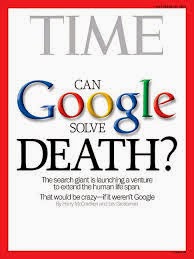
Expanded lifespan? Google spinoff Calico’s stated mission is to harness advanced technologies to increase our understanding of the biology that controls lifespan. Google’s Larry Page has also backed Singularity University. Its co-founders Ray Kurzweil and Peter Diamandis are big fans of immortality — or at least living till 700.

Can a low dose of electric current enhance a specific brain pattern to boost creativity? Flavio Frohlich of UNC (University of North Carolina) claims that using a 10-Hertz current run through electrodes attached to the scalp enhanced the brain’s natural alpha wave oscillations, triggering of a specific and complex behavior – in this case, creativity.

Damage to neural tissue is typically permanent and causes lasting disability in patients. But a method for reconstructing neural tissue using patterned nanofibers in 3D hydrogel structures promises to one day help in the restoration of functional neuroanatomical pathways and structures at sites of spinal cord injury, traumatic brain injury, tumor resection, stroke.

== Upcoming Crises? ==

As forecast in Existence, we seem to be heading for a Phosphorus crisis.  Over the long term, through depletion of easily accessible phosphate supplies.  Over the near term, by poisoning many isolated water systems with agricultural runoff.  (Note that such runoff into high circulation ocean currents is not a problem, but low circulation bodies of water… freshwater lakes and rivers, the Black Sea and Mediterranean.. are in real trouble.)  

There are potential… or at least SF’nal… solutions.  Better crop and fertilizer management.  Feeding agricultural runoff into deliberate algae fams that also take in CO2 from heavy emitters like cement plants. But we need to wake up and make solution-seeking a part of our agile crossing of the 21st Century.  You out there who are active or passive members of the science-haters cult… you will be remembered as part of the problem that almost killed us all.  Do you really want to be classified in the same camp as… as… this towering cretin...


Choose.  Stop waffling and choose whether you will keep making excuses for a "side" that promotes such knuckleheads... or instead pay attention to facts. Like --

team of scientists has discovered that ice shelves in the West Antarctic are shrinking a lot faster than they realized. The rate of shrinking has increased by 70 percent over the past decade.

In addition, there was less sea ice coverage in the Arctic this winter than in any year since satellite measurements began nearly four decades ago, and now you know why the Republicans have tried to sabotage Earth sensing satellites and science for 20 of those years.  And those of you still in denial that your side is waging acive war on science, on behalf of the only oligarchs who benefit from this campaign… well… smoke away! Because you also think tobacco is good for you.  

So where will you move the goal-posts, next?Abandoning years of official skepticism, Oklahoma’s government on Tuesday embraced a scientific consensus that earthquakes rocking the state are largely caused by the underground disposal of billions of barrels of wastewater from oil and gas wells.”  How many times will you denialists backpedal before you admit that the sciencey side is right more often?