We just watched Oppenheimer. And sure, I am grateful that Christopher Nolan is making the kind of sprawling, deeply-moving and meaningful delights for mind and senses that David Lean used to do. Like Lean, Nolan simply can't make films without the Difficulty Multiplier cranked up way past 11 (more like 1100!), which is why his one (so far) perfect film - Inception - should have won Best Picture not just of the year but the decade! And maybe more.
(Again, a near perfect film, Inception also (alas) nearly left me permanently deafened!)
Okay, regarding Oppenheimer, well, the vast cast of characters might have seemed bloated to some - not to me, since I had met several and knew the stories of almost all the rest, and even barely-glimpsed figures were treated with some effort at fairness and accuracy - even Teller. (I suspect that some reviewers didn't complain about cast-bloat since they didn't want to look ignorant.) In any event, I enjoyed the completist tour of mid century physicists and have no complaints (of any substance) about that.
Still, despite having my 99% enthusiastic approval, Oppenheimer did have aspects that one could (perhaps) call flaws, or just nitpick a little. I do wish that there had been more physics! Oh, sure, Nolan brilliantly inserted brief snippets, like Oppie's and Bethe's delight when Niels Bohr reported on Heisenberg's mistakes handling the Nazi atomic program, showing them that the Manhattan Project would likely win the race.
Nolan could have done something similar re the crucial differences between Plutonium and Uranium, and glimpsing the massive scale of effort at Oak Ridge (if Nolan would just relent on his loathing of special effects, it coulda been done for $5 and fifteen seconds of screen time.) Or Groves's worst mistake, cancelling work on centrifuges, which might have shortened development - and possibly the war - by six months.
There was room elsewhere in the movie for cuts, like a little less of that admittedly-marvelously-claustrophobic hearing room and associated flashbacks. Okay we get it. Oppie was a deeply flawed man and vulnerable to both personal vendettas and the paranoia of the time.
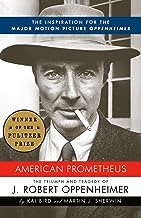
(For comparison see Day One, a much smaller film about Oppenheimer, starring the superb David Strathairn.) And American Prometheus: The Triumph and Tragedy of J. Robert Oppenheimer, by K. Bird & M. Sherwin, inspiration for Nolan's movie.

Naturally, Nolan intends to have effects. Secondarily on politics, since we need constant reminders that the Far Left can't be trusted … while almost the Entire US Right is almost always deeply corrupt and insane. All right, that's not exactly explicit in the flick, but it’s implicit in the event. And young viewers will be reminded.
More important is the reminder of what's at stake. Our one chance - as a species - to grow up.
== The basic lesson of Oppenheimer ==
The thing about Oppie was that he was correct that these powers could kill us all. In this linked 1965 CBS interview, he expressed (a decade after the events in the movie) very-guarded optimism that the terrifying image of the mushroom cloud was causing us to shift - in baby steps - toward more cautious maturity. Way too slowly! Still, far too few folks nowadays pause to note we've had 80 years of the greatest per capita peace the world ever saw.
Do you doubt that? Well, that's unsurprising. Violent episodes from Korea to Vietnam, from the Hungarian Revolt to Iraq, Bosnia and Ukraine and recurring Middle Eastern calamities remind us how how far we have to go. And yet, should we not also note that somewhere like 95% of the world’s living humans have never witnessed war personally, with their own eyes? Few of our ancestors could have said that, amid millennia of pillages and conquests and burning towns and cities.
Well, it didn't happen the way he wanted - by handing power over to say the UN. It happened instead through the thuggishly immature process of balance-of-terror. A phase during which the U.S. always had advantages that it always chose not to exploit. (History will note that fact, even if China, Russia etc. refuse to. Were they ever to have such power, they would use it, instantly.)
I assert than it also happened because Oppie was leader of a commune of artists. What do I mean by that?
If "art is imagery which visually transforms human hearts without words or persuasion," then their team creation - that terrifying mushroom cloud - was undeniably the greatest, heart-transforming artwork in all of human history. Made by scientists, engineers and nerds…
… almost matched by the Twentieth Century's other great, soul-changing artwork, the December 1968 gift of Apollo 8... culminating that awful, exhausting year by giving humanity a glimpse, at last, of what's at stake: a tiny oasis world, floathing in the vast desert of space. But I've written about that elsewhere.
== Just so we are clear, here ==
Don't come away thinking I am 'critical' of Christopher Nolan's new masterpiece. I am awfully glad it's out there. And that the media somehow hyped “Barbenheimer” in ways that got thousands of Barbie fans (my dad attended and reported from the “Barbie Trial”) to complete the dual experience by viewing something rather deeper.
I am very glad we have a new David Lean in Christopher Nolan. There are other, great stories that need telling. (May I offer suggestions?)
Seriously, whenever he offers us something, I’ll be eagerly ready.

