Showing posts with label physics. Show all posts

Saturday, April 25, 2020

Science patterns and speculations... and Freeman Dyson and Stephen Wolfram

My friend and legendary polymath Freeman Dyson passed away at 96. We had lunch planned for when he and his irrepressibly impressive wife Imme next came to their apartment in La Jolla. Alas, it’s not to be.

Freeman’s long and creative life was spent being a scientific and philosophical rascal — rewarded for impudent skills at questioning anything and everything… skills that would likely have got him strangled in any other culture. Born into this one, he rose from World War II Blitz survivor to one of the most original thinkers in mathematics, physics and space technology.

One thing you’ll not read in any of the bios spilling across media is my judgement that Freeman Dyson was the greatest theologian of the 20th Century! He and Tulane University Professor Frank Tipler had books in the 80s forecasting the likely condition and interests and survival of intelligent super-beings in the distant future. Tipler’s notions centered on a cyclical cosmology — gravity slowing the Bang expansion, then reversing it into a Big Crunch — as illustrated in Poul Anderson's famed novel Tau Zero. 

Meanwhile, Freeman pursued the logic of the Great Dissipation, assuming that the expansion goes on forever; how might intelligence continue long after galaxies, stars and even protons decay away?

Freeman “won” that rivalry when astronomers discovered universal acceleration of expansion (the fact behind “Dark Energy” speculations.) Hence my awarding him that title. 

(The title of Greatest 21st Century Theologian may be won by another friend - Roger Penrose - who has revived cyclical universe notions in new and funky ways that are totally consistent with Freeman.)

Of his many legacies, Freeman's absurdly creative and productive offspring -- first George & Esther and then four more with Imme -- count highly. One recent memory was taking him (with the Benford boys) to revisit the glider point at Torrey Pines (near UCSD) where he 60 years ago helped to invent a new kind of launcher catapult. What a guy.

Okay, that was an impulsively garrulous riff, borne out of my sitting here perplexed and grieving, but celebrating a life like no other.

== Speculations and advances ==

Speculations run rampant about the source of the coronavirus pandemic, which I went into elsewhere… and whether it might have repercussions similar to Chernobyl.  

Meanwhile folks might find interesting my stories about infectious disease, offering insights into how some become killers and others might evolve into something else. Maybe cooperative. Or even weird? "The Giving Plague" was a Hugo nominee (It's in Otherness but also available on my website.)

And "Chrysalis" Is a biology tale found in my third and best collection Insistence of Vision.


And moving on... this woman apparently has the super-power to smell early stages of Parkinson’s Disease, long before a victim shows any outward symptoms.

Researchers have created a mutant bacterial enzyme that can in only a couple of hours break down PET plastic bottles into their individual chemical composites, which could later be reused to make brand new bottles. Conventional recycled plastic that goes through a “thermomechanical” process isn’t high enough quality and is mostly used for other products such as clothing and carpets.

An interesting claim: “ "Air-gen" or air-powered generator, connects electrodes to microbe-created protein nanowires to produce electrical current generated from the water vapor naturally present in the atmosphere.” I’d like to see the energy gradients, to believe it.

Scientists describe how they assembled genomes made up of blueprints for proteins — and demonstrated that it was capable of replicating 116 kilobytes worth of its own RNA and DNA. The team plans to build an “enveloped system” that can reproduce like this last one — but also consume nutrition and dispose of waste, like a living cell.

Between the 1860s-1890s, father-and-son glassworkers Leopold and Rudolf Blaschka created thousands of anatomically correct models of marine invertebrates. They're so delicate it could be mistaken as a real sea creature. Thank you David Crosby!

Scientists outlined a method to “shape intense laser light in a way that accelerates electrons to record energies in very short distances: the researchers estimate the accelerator would be 10,000 times smaller than a proposed setup recording similar energy, reducing the accelerator from nearly the length of Rhode Island to the length of a dining room table.”


Especially interesting as an amateur beekeeper who does have problems with wax moths… Showing how beekeeping has multiple uses, an amateur beekeeper and scientist at the Institute of Biomedicine and Biotechnology of Cantabria learned of the ability of the greater wax moth larvae in eating plastics after she plucked the larvae out of her beehives and tossed them in the garbage only to find them chewing holes in the bag. The one drawback is they excrete a toxic substance when fed plastic. 

==  A Theory of All ?  ==

More diversion from those exploring the smart-edge of civilization. Polymath Stephen Wolfram - inventor of Mathematica and the Wolfram Language - wrote me a note about his new venture… solving the Riddle of Everything and "cracking the code in physics." Do visit his linked site - Stephen has credibility! In addition to the web-posted missive linked below, see his "Physics project.”

While I'm a licensed, if minor league physicist, it strikes me that his approach has much in common with (1) cellular automata using simple rule sets to create complexity (and note that John Conway, inventor of the Game of life (featured in Glory Season), died of Covid, last week), plus (2) pattern-sifting... plus (3) big-data machine-learning systems... both of the latter needed in order to cull the vast population of rule-based 'universes' down to a few worth contemplating.

When we last spoke - gosh a year ago - we mulled over how different statistical regimes -- e.g. Bose-Einstein vs Fermi-Dirac -- would certainly apply to the range of rule sets. And sure enough, in this missive Stephen says "the only requirement is that it’s distinct from all other elements," suggesting that the example he gives in this web presentation uses the Fermi-Dirac approach. But of course in a "universe model" you'd have to generate both types, since fermions make up all the "matter" -- Leptons and quarks -- while bosons carry the forces of light and EM and gravity etc. It will be a combination of both rule sets, that interact, with bosons created-destroyed in a simple tabulation of energy... while fermions must keep careful track of their identity and net-sum number.

The first exampled network that SW's rule pattern "grows" will strike you as looking like a human brain. I wouldn't make anything of that. But the stringy clumping of the galactic clusters - according to recent maps -- also comes to mind.

Friday, November 14, 2014

Is this intelligence? And more science...

Commencing our weekend science roundup -- leaving comets (!) for another time.... 

artificial-intelligence-dangerOn io9... fast becoming the "it" site for open and hungry minds... George Dvorsky's column takes on some big picture stuff.  

In a recent posting, he interviewed me about artificial intelligence (AI) and how we can get into a good mental state to take on the many issues involved: Are We Overthinking the Dangers of Artificial Intelligence?
== Genes for longevity? ==

George goes on in another article to explore " “supercentenarians” living past 110. Superficially, it would seem that there is a genetic component to longevity, since centenarians do not differ that much from the general population in lifestyle choices and their relatives also live longer than average.  Researchers: “mapped the genomes of 17 supercentenarians (16 women and one man). Now, that may not sound like a large sample pool, but keep in mind that there are only 74 super-c's alive today, with 22 in the United States. These 17 samples were compared to those of 34 people aged 21 to 79.”

“From this small sample size, we were unable to find rare protein-altering variants significantly associated with extreme longevity.”  On the other hand: “It is not surprising that a highly complex trait such as longevity is not explained by a single Mendelian gene”

==Should we uplift?==
In a recent piece for New Scientist, some doubt is cast on the “genius of the sea” status of dolphins. I am not surprised. Although I portray descendants of today’s Tursiops dolphins piloting spaceships -- dazzling civilization with poetry and wisdom — I have never been one of those romantics who proclaimed them to be our equals presently, in any meaningful interpretation of “sapience.” That doesn’t mean they aren’t special! (Or that we should not bend our wills mightily toward saving the whole planetary habitat; see EARTH.)
What impresses me most about dolphins is their capacity for non-kin altruism, which is nearly as great as ours, and perhaps more consistent. And their stunning eagerness to learn new things, with a level of curiosity that seems to exceed adult chimpanzees by some distance. Those traits — and anecdotal impressions from some researchers — lead me to think that we would get many Tursiops volunteers, if we could somehow offer them a choice, whether to undertake the long and difficult path of uplift. A path that might lead to those brilliant partners and critics, who would accompany us to the stars.

uplift-sapienceShould We Engineer Animals to be Smarter? See this BBC Future article by Tim Maughan about animal uplifting, featuring myself and George Dvorsky. I've been in this field a long time and my views are actually fairly nuanced. I am not convinced we should do this thing. Indeed, some arguments against uplift (e.g. the pain of transition) I deem to be more valid than others (e.g. other species have their "own intelligences" -- that's true, in a sense, but those fallow populations would be left alone.) 
Here are some of my own insights on the matter: Will We Uplift Other Animals to Sapience? and Are Animals Intelligent ...Enough?

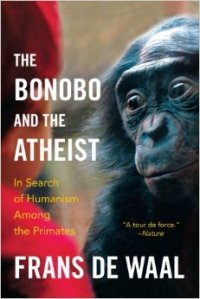
BonoboTwo books that peer into the minds of animals: 

The Bonobo and the Atheist: In Search of Humanism Among the Primates, by primatologist Frans de Waal, explores the biological origins of ethical behavior in primate communities, such as the bonobos -- arguing that morality originates, not in religion, but rather as a product of evolution -- and an instinct for fairness and altruism.

Another interesting concept... Hope they send me a copy to review. “Inside of a Dog: What Dogs See, Smell, and Know.” Cognitive scientist Alexandra Horowitz takes a look at the canine world, exploring how dogs perceive the world around them, each other, and what dogs might think of that other quirky animal -- their human owners:

inside-dog"Horowitz introduces the reader to dogs’ perceptual and cognitive abilities and then draws a picture of what it might be like to be a dog. What’s it like to be able to smell not just every bit of open food in the house but also to smell sadness in humans, or even the passage of time? How does a tiny dog manage to play successfully with a Great Dane? What is it like to hear the bodily vibrations of insects or the hum of a fluorescent light? Why must a person on a bicycle be chased? What’s it like to use your mouth as a hand? In short, what is it like for a dog to experience life from two feet off the ground…” reads the summary on Amazon.

Of course I smelled at the oblique Grouch Marx connection, in the title.
==On the Fringes of Life==
Scientists have created a crystalline material that can pull all the oxygen out of room with just a spoonful. (Probably a spectacular exaggeration.) And it can release that oxygen when and where it's needed. Will this lead to the gill-masks that I portrayed both in EXISTENCE and the uplift novels? 

life-deathFascinating: The ever-regenerating hydra: All you would-be immortals! Watch this interesting animation in which Robert Krulwich shows us the animal that refuses to die! Ah, but then, when you penetrate the mystery, it turns out to be a PATTERN that never dies. But is it the same individual?
Precise brain stimulation techniques are now available for the realization of non-invasive computer-brain interfaces (CBI). This appears to mean that computer-mediated brain-to-brain communications are in the offing.
Mammals can’t regenerate lost limbs like salamanders can, but they can repair large sections of their ribs.  BTW see my short story about organ regeneration leading to something very very weird, in last month's ANALOG Magazine.
Replace colonoscopies with Yogurt? Scientists are developing synthetic molecules that can be introduced into the body via yogurt, and will interact with cancer in a way that produces telltale biomarkers. These molecules can then be detected easily when passed in urine.
More on how curiosity can be learned... and it then helps learning!

Dweebcast is one of these joyfully-geeky mini-shows that celebrate tech optimism. In this episode they ask me: "Hey, where are the hoverboards we were promised in Back to the Future?" 
==Physics and Technology Updates== 
As reported in Science Daily: “Researchers twist four radio beams together to achieve high data transmission speeds. The researchers reached data transmission rates of 32 gigabits per second across 2.5 meters of free space in a basement lab. For reference, 32 gigabits per second is fast enough to transmit more than 10 hour-and-a-half-long HD movies in one second and is 30 times faster than LTE wireless.”
Engineers have printed an ant-sized radio onto a silicon chip that costs pennies to make and draws power from the information it receives. This brings to life the ubiquitous smart dust potential that author Vernor Vinge prognosticated in fiction, more than a decade ago.
Printable solar panels? Kewl. But I have a sci fi reason for watching this tech. There will come a day when we learn how to make solar panels so simply that it could be a Cottage Craft, like blacksmithing, even after (if) civilization falls. Imagine if we ever experience a truly major fail… but simple craftsmen can provide villages with panels like roofing tiles that provide electricity. From then on, the utter baseline state of humanity will never again be caves or log cabin misery. There would always be light and basic electronics. And a limit to how far we could ever fall again.

imagesA fascinating experiment is being concocted for Fermilab, to place two 400m Michelson interferometers side-by-side and see if their random quantum positional jitters correlate with each other. If they do, then they will have used this Holometer to reveal “holographic noise” at the Planck scale that communicates in a quantum way across space-time… a link not only between the two interferometers, but also between the two realms of physics that (so-far) have not meshed well. For more details, see The Fermilab Holometer Proposal. 
Aren’t you proud to be a member of such a civilization?  Oughta be.
Graphene “paint” may be the most durable and corrosion resistant coating ever.
One of two British explorer ships, from the infamous-mysterious Franklin Expedition that vanished in the Arctic more than 160 years ago, has been found, in vivid sonar images. 
Here’s a cool (and necessary) notion.  The conceptualized 3D Re-Printer allows its user to feed used plastic items, which they would normally discard as trash, into the top of the machine. They machine will then grind the plastic up into a powder like material. At this point, the printer melts that powder, and extrudes it in molten form. Though it will take years to perfect it to the extent we saw in Back to the Future, where Doc Brown dumps anything at all into the Mr. Fusion.
Neat stuff: blasting incoming missiles and drones out of the sky with a high-energy laser, carried aboard a rugged truck. The see-saw of attack-defense just took another swing. It's a sci fi world. Now let's produce science fiction the (accurately) predicts something better than dystopias.
== Plus a reminder ==
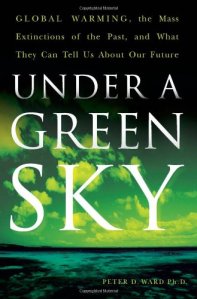
Peter Ward is not optimistic. The changes we are wreaking on Earth go far beyond a few degrees of warming. Or even ocean acidification, which is clear and irrefutable (denialist-cultists always yell Squirrel and change the subject). Ward shows that the dead Black Sea and dying Mediterranean and Caribbean are only the beginning.
Green-sky-wardIn “Under a Green Sky” he shows parallels with the Permian Triassic extinction, in which hydrogen sulfide (H2S) gas fizzed into the atmosphere, killing far more life than that measly dinosaur-asteroid. It is part and parcel to the steady acidification of the oceans, which is a clear fact and caused by human generated CO2. 

One thing is certain, you denialist-cultists who obstructed even moderate-compromise (TWODA) measures - sensible, moderate steps we could take, just in case all the smart people actually turn out to be right - none of you will have a place on any life arks.