Showing posts with label first contact. Show all posts

Thursday, February 09, 2023

"Aficionado": A tale from EXISTENCE


Okay... let's have a "shut up and just play your guitar" moment...


AFICIONADO

By David Brin

A stand-alone chapter from EXISTENCE  (2012)
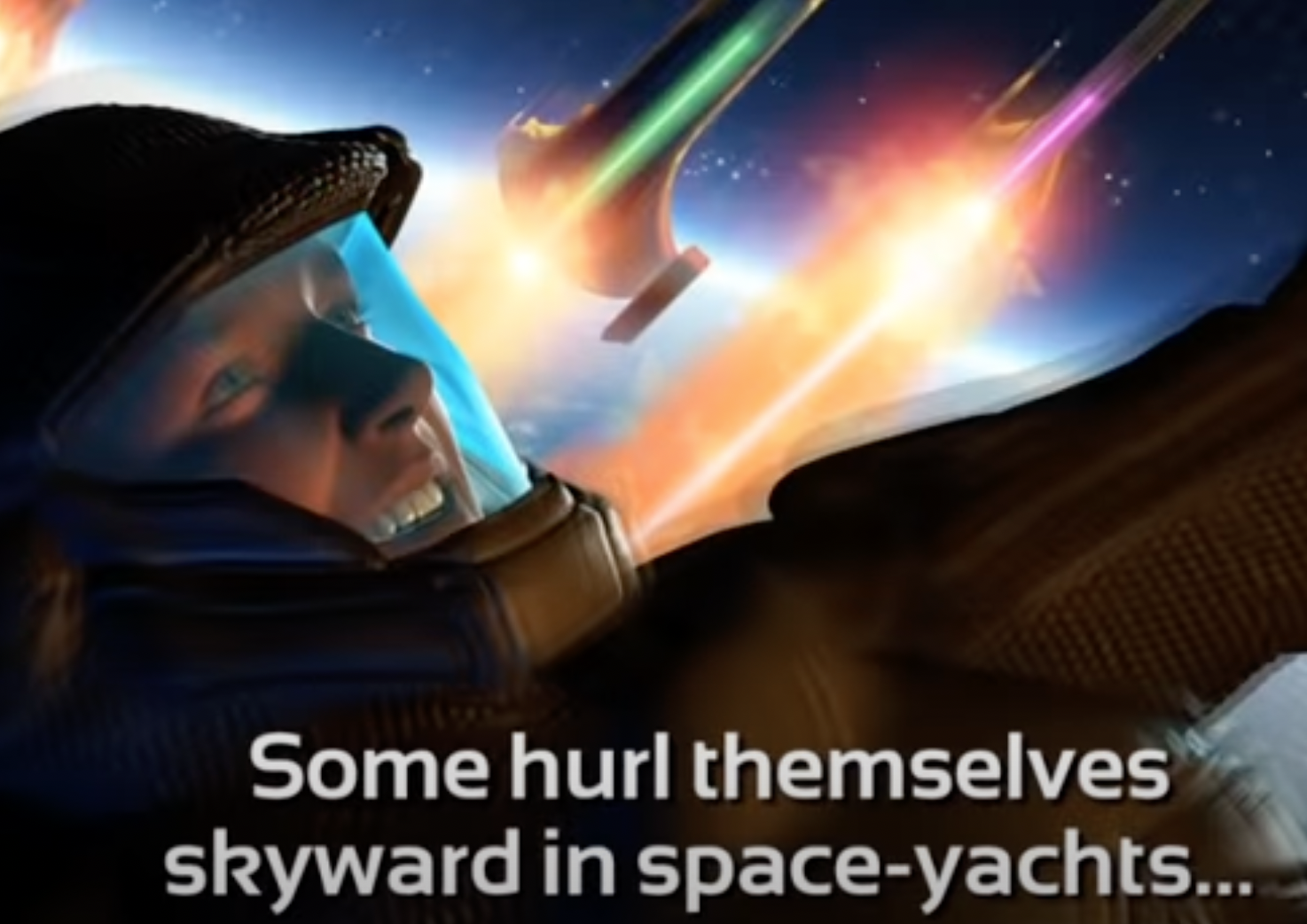


Cameras stared across forbidden desert, monitoring disputed territory in a conflict so bitter, antagonists couldn’t agree what to call it.

One side named the struggle righteous war, with countless innocent lives in peril.

Their opponents claimed there were no victims, at all.

And so, suspicious cameras panned, alert for encroachment. Camouflaged atop hills or under highway culverts or innocuous stones, they probed for a hated adversary. And for some months the guardians succeeded, staving off incursions. Protecting sandy desolation.

Then, technology shifted advantages again.

The enemy’s first move? Take out those guarding eyes.

*   *   *

Infiltrators came at dawn, out of the rising sun—several hundred little machines, skimming low on whispering gusts. Each one, resembling a native hummingbird, followed a carefully scouted path toward its target, landing behind some camera or sensor, in its blind spot. It then unfolded wings that transformed into holo-displays, depicting perfect false images of the same desert scene to the guardian lens, without even a suspicious flicker. Other spy-machines sniffed out camouflaged seismic sensors and embraced them gently—cushioning to mask approaching tremors.

The robotic attack covered a hundred square kilometers. In eight minutes, the desert lay unwatched, undefended.

Now, from over the horizon, large vehicles converged along multiple roadways toward the same open area—seventeen hybrid-electric rigs, disguised as commercial cargo transports, complete with company hologos. But when their paths intersected, crews in dun-colored jumpsuits leaped to unlash cargoes. Generators roared and the air swirled with exotic stench as pungent volatiles gushed from storage tanks to fill pressurized vessels. Consoles sprang to life. Hinged panels fell away, revealing long, tapered cylinders on slanted ramps.

Ponderously, each cigar shape raised its nose skyward while fins popped open at the tail. Shouts grew tense as tightly coordinated countdowns commenced. Soon the enemy—sophisticated and wary—would pick up enough clues. They would realize … and act.

When every missile was aimed, targets acquired, all they lacked were payloads.

A dozen figures emerged from an air-conditioned van, wearing snug suits of shimmering material and garishly painted helmets. Each carried a satchel that hummed and whirred to keep them cool. Several moved with a gait that seemed rubbery with anxious excitement. One skipped a little caper, about every fourth step.


A dour-looking woman awaited them, with badge and uniform. Holding up a databoard, she confronted the first vacuum-suited figure.

“Name and scan,” she demanded. “Then affirm your intent.”

The helmet visor, decorated with gilt swirls, swiveled back, revealing heavily tanned features, about thirty years old, with eyes the color of a cold sea—till the official’s instrument cast a questioning ray. Then, briefly, one pupil flared retinal red.

“Hacker Sander,” the tall man said, in a voice both taut and restrained. “I affirm that I’m doing this of my own free will, according to documents on record.”

His clarity of purpose must have satisfied the ai-clipboard, which uttered an approving beep. The inspector nodded. “Thank you, Mr. Sander. Have a safe trip. Next?”

She indicated another would-be rocketeer, who carried his helmet in the crook of one arm, bearing a motif of flames surrounding a screaming mouth.

“What rubbish,” the blond youth snarled, elbowing Hacker as he tried to loom over the bureaucrat. “Do you have any idea who we are? Who I am?”

“Yes, Lord Smit. Though whether I care or not doesn’t matter.” She held up the scanner. “This matters. It can prevent you from being lasered into tiny fragments by the USSF, while you’re passing through controlled airspace.”

“Is that a threat? Why you little … government … pissant. You had better not be trying to—”

“Government and guild,” Hacker Sander interrupted, suppressing his own hot anger over that elbow in the ribs. “Come on, Smitty. We’re on a tight schedule.”

The baron whirled on him, tension cracking the normally smooth aristocratic accent. “I warned you about nicknames, Sander, you third-generation poser. I had to put up with your seniority during pilot training. But just wait until we get back. I’ll take you apart!”

“Why wait?” Hacker kept eye contact while reaching up to unlatch his air hose. A quick punch ought to lay this blue-blood out, letting the rest of them get on with it. There were good reasons to hurry. Other forces, more formidable than mere government, were converging right now, eager to prevent what was planned here.

Besides, nobody called a Sander a “poser.”

The other rocket jockeys intervened before he could use his fist—probably a good thing, at that—grabbing the two men and separating them. Pushed to the end of the queue, Smits stewed and cast deadly looks toward Hacker. But when his turn came again, the nobleman went through ID check with composure, as cold and brittle as some glacier.

“Your permits are in order,” the functionary concluded, unhurriedly addressing Hacker, because he was most experienced. “Your liability bonds and Rocket Racing League waivers have been accepted. The government won’t stand in your way.”

Hacker shrugged, as if the statement was both expected and irrelevant. He flung his visor back down and gave a sign to the other suited figures, who rushed to the ladders that launch personnel braced against each rocket, clambering awkwardly, then squirming into cramped couches and strapping in. Even the novices had practiced countless times.

Hatches slammed, hissing as they sealed. Muffled shouts told of final preparations. Then came a distant chant, familiar, yet always thrilling, counting backward at a steady cadence. A rhythm more than a century old.

Is it really that long, since Robert Goddard came to this same desert? Hacker pondered. To experiment with the first controllable rockets? Would he be surprised at what we’ve done with the thing he started? Turning them into weapons of war … then giant exploration vessels … and finally playthings of the superrich?

Oh, there were alternatives, like commercial space tourism. One Japanese orbital hotel and another under construction. Hacker owned stock. There were even multipassenger suborbital jaunts, available to the merely well-off. For the price of maybe twenty college educations.

Hacker felt no shame or regret. If it weren’t for us, there’d be almost nothing left of the dream.

Countdown approached zero for the first missile.

His.

“Yeeeee-haw!” Hacker Sander shouted …

… before a violent kick flattened him against the airbed. A mammoth hand seemed to plant itself on his chest and shoved, expelling half the contents of his lungs in a moan of sweet agony. Like every other time, the sudden shock brought physical surprise and visceral dread—followed by a sheer ecstatic rush, like nothing else on Earth.

Hell … he wasn’t even part of the Earth! For a little while, at least.

Seconds passed amid brutal shaking as the rocket clawed its way skyward. Friction heat and ionization licked the transparent nose cone only centimeters from his face. Shooting toward heaven at Mach ten, he felt pinned, helplessly immobile …

… and completely omnipotent.

I’m a freaking god!

At Mach fifteen somehow he drew enough breath for another cry—this time a shout of elated greeting as black space spread before the missile’s bubble nose, flecked by a million glittering stars.

*   *   *

Back on the ground, cleanup efforts were even more frenetic than setup. With all rockets away, men and women sprinted across the scorched desert, packing to depart before the enemy arrived. Warning posts had already spotted flying machines, racing this way at high speed.

But the government official moved languidly, tallying damage to vegetation, erodible soils, and tiny animals—all of it localized, without appreciable effect on endangered species. A commercial reconditioning service had already been summoned. Atmospheric pollution was easier to calculate, of course. Harder to ameliorate.

She knew these people had plenty to spend. And nowadays, soaking up excess accumulated wealth was as important as any other process of recycling. Her ai-board printed a bill, which she handed over as the last team member revved his engine, impatient to be off.

“Aw, man!” he complained, reading the total. “Our club will barely break even on this launch!”

“Then pick a less expensive hobby,” she replied, and stepped back as the driver gunned his truck, roaring away in clouds of dust, incidentally crushing one more barrel cactus en route to the highway. Her vigilant clipboard noted this, adjusting the final tally.

Sitting on the hood of her jeep, she waited for another “club” whose members were as passionate as the rocketeers. Equally skilled and dedicated, though both groups despised each other. Sensors showed them coming fast, from the west—radical environmentalists. The official knew what to expect when they arrived. Frustrated to find their opponents gone and two acres of desert singed, they’d give her a tongue-lashing for being “evenhanded” in a situation where—obviously—you could only choose sides.

Well, she thought. It takes a thick skin to work in government nowadays. No one thinks you matter much.

Overhead the contrails were starting to shear, ripped by stratospheric winds, a sight that always tugged the heart. And while her intellectual sympathies lay closer to the eco-activists, not the spoiled rocket jockeys …

… a part of her still thrilled, whenever she witnessed a launch. So ecstatic—almost orgiastic.

“Go!” she whispered with a touch of secret envy toward those distant glitters, already arcing toward the pinnacle of their brief climb, before starting their long plummet to the Gulf of Mexico.


=====


Depending on votes in the comments section, I could post the 2nd half of this stand alone story from EXISTENCE - just re-released on Kindle.


See the vivid, 3-minute video trailer! (Images by Patrick Farley.)


Saturday, March 23, 2019

Wonders from space... and beyond


Naturally, I'll have much to say about the Mueller Report, but not today. (Well, maybe in a coda, at the end.) For now, let's boost our spirits by...

... looking toward space!  Starting with...

A
 stream of terrific shadow selfie images from Japan's Hyabusa-2 probe touching down on  asteroid Ryugu, then getting blown back as it fires a bullet to kick up sample material. 'If all goes according to plan, these three samples will come down to Earth in a special return capsule in December 2020.” And this after deployment of three mini-landers.

This seems a perfect partnership with NASA’s OSIRIS-Rex probe, sampling another asteroid. Below, I'll discuss how the U.S. and Japan plus a few tech wizards should go do these treasure rocks (where the vast wealth is) while letting China, Russia and all the other Apollo-wannabes scamper to sterile-useless Luna for their coming-of-age rites. 

And yet.... we now find that incoming asteroids may be harder to break than scientists previously thought. 


== It's quiet out there... maybe too quiet ==

My paper on the ethical, logical and theological  bases for METI – Messaging to ET Intelligences – is now in the journal Theology & Science. ‘The “Barn Door” Argument, The Precautionary Principle, and METI as “Prayer”—an Appraisal of the Top Three Rationalizations for “Active SETI.”’ Yes, so far it is restricted by subscription. But let me offer you the abstract:

“Proponents of Active SETI, or METI, defend their messaging-to-aliens agenda with fallacious arguments like the Barn Door Excuse, that technologically advanced extraterrestrials must have already listened to our radio leakage, (e.g. “I Love Lucy”), hence more direct beaming will not betray Earth’s location. 


"Further, they claim that sending pinpointed, collimated messages will only lead to positive outcomes. In fact, laser-like “messages” are far more powerfully detectable at great distances than old-time television, and concerns about potential downsides should be appraised by scientific risk-assessment. It is argued that METI is psychologically driven as a version of the ancient human practice of prayer.”


Yes, there truly was a reason it got published in Theology and Science.


== Yes, humanity should keep exploring the moon ==

We’ve learned so much from lunar bits, especially taken by the Apollo missions. This Apollo14 sample apparently formed deep under the crust of the Earth, then got blasted to Earth’s surface, then blasted to land on the Moon, got buried and modified, then got blasted onto the moon’s surface to be plucked by an Apollo14 astronaut. How do we figure all this? We’ve learned to track an amazing suite of physical and chemical and isotopic clues thanks to … well, science.  Federally funded R&D that propelled half of our economy, since WWII.

And yet...  Come see a screed of utter-drooling nonsense –  declaring that China is “winning the new space race‼!” Oh, no! They just put a tiny solar rover on the Moon!  "The stakes are high: Who will be able to obtain the vast resources in space, for example, water/ice, iron, titanium, platinum and nickel; secure the routes of trade; and write the rules of space commerce such as trade in energy propellant and precious metals."

Sigh. I am forced to get repetitive. The moon has what? It has absolutely none of those things except possibly some buried water as a source of propellant, at the difficult to access poles. And even that is likely to be eclipsed by vast amounts of water available in asteroids... along with actual, rather than make-believe gold, platinum etc. 

Why pretend to justify joining the Apollo-wannabes with faux claims of lunar 'resources' that don't exist? Even the normally smart and cogent Isaac Arthur breaks his arms desperately waving away any need to justify that claim with actual numbers. Oh, and here’s another cock n’bull story about moon mining and Helium 3 mythology, without a hint of due diligence on actual numbers or plausibility.

The only way that China wins any "space race" would be either militarily (as in the first chapter of Ghost Fleet; and yes, be wary) or else if the $%$#! Republicans force us into a "united/international consortium to go back to the moon." In that case – a lose-lose for the U.S. -- we'd have to transfer all our technology, boosting the Chinese and Russian while gaining nothing. 

Show us the "ores" you blithely armwave to be on the moon! Show us clear charts how it would be a 'way-station" to Mars. You can't. Oh, but with no one else apparently calling out this insanity, with a sigh, let me reiterate. 

The moon started out resource depleted because it came from Earth's crust, after most metals sank into our planet's core. Then the newborn-molten moon fractionated again, sending most of what was left settling into it's own core! As for what remained, there were no water processes which concentrated most useful ores on Earth. 

True there's aluminum and silicon and smidgeons of titanium in Luna's crust... and all of it is in super tight oxygen bonds that will take truly major energy input to separate -- possible, but hugely non-trivial. A little scattered meteoritic iron might get collected by dragging magnets endlessly through dust. Or we could go where it came from...

In contrast, half of the asteroids seem to have come from a shattered proto-planet. Some of them come from its carbon-volatiles-water rich outer crust. Some from the stony middle and many of them from the purified metal/iron/gold etc core. Pre-refined metal! 

Again, the only resource advantage of the moon is purported Helium Three. And please show it to me. Show me a customer. Hold me back from strangling the next cultist raving "Helium Three!" 

Yes, I do think we should keep exploring Luna!  Humanity is going back there, no matter what. And that's fine, Chinese and later Indian, Russian and Saudi and European and billionaire tourists will skip about, planting footprints in that dusty, useless, utterly resource-free plain. (And the U.S. should sell them services, maybe landers! Indeed, we might send a few small robots to explore some of those lava tube tunnels, partly to prevent the Chinese from claiming them all. But joining their mad rush for footprints? Why?)

Their surface reasons will be 'scientific,' but we all know it will be tourism and national pride. Having their Bar Moonzvah (“Today I am a man!”) 

Mazel Tov. The Americans and Japanese and Diamandis-ovs and Musk-ovites should transmit congratulations. Let's blow them kisses from the asteroids where we're getting spectacularly rich, doing things that only we (with our fellow true modernists) can do.

Wake up and smell the platinum.

== More news about deadly rocks ==

Fascinating evidence suggests that two of the super-Earths orbiting very close to a Kepler studied star may have collided in the past and that one of them is so dense it might consist only of the stripped iron core of an earlier, larger version.

Evidence suggesting that the rate of asteroids impacting the Earth-Moon system actually went up, starting about 290 million years ago, and the rate probably rose by 2.6x.  Perhaps a major asteroid broke up around then. In any event, all the more reason to support the B612 Foundation’s work, helping count and study potential impactors and concocting plans to deal with them.

Meanwhile, the theory that Earth’s volatile elements arrived through the steady bombardment of ancient meteorites during the Late Heavy Bombardment has been challenged by those who propose that a catastrophic collision between Earth and a Mars-sized object, sometimes referred to as Theia, some 4.4 billion years ago --- which many believe created Earth’s moon – may have delivered those volatiles.

== Go-go! ==

In preparation for it's first potential test fire, followed by hover trials, SpaceX had moved Elon's Starhopper suborbital vehicle to a launch pad at its Boca Chica test site near Brownsville, Texas. 

== And finally ==

Ah, but then there’s the Chinese orbital tracking station in Patagonia, operating without the slightest supervision by Argentina’s government or public. One more highly… assertive… international action. Only note that Patagonia is also where some of the world’s oligarchic elites have been buying up whole mountains for their post-apocalyptic retreats. All based on their weirdly smug assumption that we all won’t know exactly where they’ll be, when we decide to get mad.

Can you see patterns under the patterns? If Alien meddlers wanted to ensure our failure... or get hilarious reality TV ... the perfect plan is is to use their agents -- (Rupert? Vlad) to craft what we see right now. Oh, but let's not get all science-fictional!  Not till next time.

Friday, November 17, 2017

Your nerdy love of sci fi could save the world! Announcing… TASAT

Here’s a Major Announcement of a project that's been in my thoughts for a long time. A way that you -- yes you -- can be part of an action team of science fiction readers who might someday use your powers of SF'nal story memory to help save the world!

Bear with me while I explain. 

Fretting about potential threats to civilization, members of the Protector Caste (intel agencies and all that) keep inviting authors of “hard” or realistic science fiction to offer big perspectives, or terrifying possibilities. “You sci fi guys think up the scariest things,” one official lauded. The same can be said for tech innovators and visionaries seeking insights into where we're heading. 

Yet, there's a frustration. When pondering some real or hypothetical scenario, I often think: hasn't some earlier author considered this, amid the vast number of past tales?

== A solution? TASAT (There’s a Story about That!) ==

Consider the vast library of science fictional thought-experiments published since Mary Shelley first wrote about how the creation of new kinds of life might be mishandled—a warning with new variants in Planet of the Apes, Jurassic Park, I Robot, and Ex Machina. 

Some are “self-preventing prophecies” like Orwell’s Nineteen Eighty-Four, Soylent Green, Dr. Strangelove or Silent Spring. Other SF projections come true.

Alas, for every SF thought experiment that achieves renown, hundreds molder in back issues of Astounding or Galaxy, or some novel only recalled by a few dozen fans out there—tales about how the world might veer in unexpected directions. Shouldn’t those concepts be available, as a background library of worked-out scenarios, in case we ever face some sudden choice?

== Activate group memory! ==

Imagine some government or NGO must respond quickly to a First Contact situation, as in the film Arrival. In a hurry, they gather “experts” who leap to premature conclusions.

So they call on the TASAT hub—part of sci-fi fandom’s collectively sagacious Group Mind— to cite and provide stories published across the last century. Short tales, novels, movies, think-pieces and art that offer unusual scenarios, potential mistakes, or surprise twists, helping our leaders or emissaries to perceive a wider picture. 

Or take the developer of an augmented reality app, a spacecraft designer, or a company revolutionizing communication technology. Might even some outlandish tale help to inform the next wave of science fact? 

You can be part of this informal network. The only qualification? Having read a lot of stories! Watched a lot of flicks. Played bunches of realistic games. There may come a time when you — by pointing to some obscure tale — could help to save the world!

== Examples! ==

Suppose a company has developed a new bacterium that pulls Nitrogen out of the air faster and better than anything known, creating massively cheap fertilizer? What could go wrong? A TASAT alert on this prospect would likely cause someone to cite Hal Clement's novel The Nitrogen Fix, along with a warning to be careful.

Take the "Flynn Effect" ...where the last three generations of children in the West have had successively higher average IQ. Suppose it accelerates, suddenly and rapidly. While some might ponder the "Children of the Damned" flicks, or cite Poul Anderson's novel Brain Wave. Others might suggest Thomas Disch's Camp Concentration, wherein IQ-rise is triggered by a venereal disease. No one suggestion need ever be right! It could be enough that such examples cause the responsible parties to widen their horizons, and not leap to the first, logical theory.

Then there's the almost infinite supply of alien First Contact tales, with some even portraying a TASAT-like process. Take the Niven and Pournelle opus Footfall, in which the government wisely establishes both optimistic and pessimistic committees.  Another of you (under comments, below) cited Gordon Dickinson's "The Alien Way," in which the protagonist digs through library stacks to find a half-remembered scientific article about bear behavior that will help him to understand the instinctive underpinnings of  an alien race.

If ever we find ourselves in a possible contact situation, our very survival might depend on having available a wide variety of scenarios, suggesting: what's "obvious" ain't necessarily so.

== Sign up! ==

So browse the TASAT Site! Join the community to get TASAT alerts. Even pose one, now and then! 

This is not just another sci fi discussion/argument site, but a place to cite actual, accessible stories, perhaps even pertinent to hurried decision makers.

(Did I mention the TASAT Facebook site, as well?)

Harness your nerdiness for the good of civilization!

TASAT is affiliated with the Arthur C. Clarke Center for Human Imagination at the University of California, San Diego.  

So sign up for TASAT! Be part of the nerdy community that might save us all, someday, by chiming up with an obscure link, saying: 


====

====

Sunday, December 16, 2007

Earth's "foreign policy"

Here is a remise of one of my many distracting side ventures...

For those of you who haven't been following... the Search for Extraterrestrial Intelligence (SETI) has taken a strange veer, of late. So here's another informative little rant about the kind of topic that calls for a far more intelligent and far-seeing leadership class -- if we are to deal with a bewildering array of 21st Century quandaries.

SHOULD HUMANITY ANNOUNCE ITS PRESENCE TO THE COSMOS? 

ShoutingCosmosFor you neos in this topic, you might want to start elsewhere then come back here. My own expose on this topic (ignore the lurid illustrations), can be found at:
http://lifeboat.com/ex/shouting.at.the.cosmos

One person who has expressed views on this is Britain's own prominent astronomer David Whitehouse.


THE LATEST SALVO

Seth Shostak of the SETI Institute recently posted a short essay, once again laying down what should be called the “Standard SETI position” on the likelihood of interstellar travel... and hence any conceivable physical danger that might arise from first contact with Extra-Terrestrial Intelligent Civilizations (ETICs). I invite you all to have a look, hear him out, then come back here.

Essentially, Shostak seeks to dismiss the notion that interstellar contact can occur in any way that might prove dangerous to either side of such an encounter. This need has grown more pressing, as some members of the SETI community, in Russia and Argentina and Canada, for example, have sought to expand the process, from its traditional mode of passive listening or “searching” for ETI to a far more assertive program of actively transmitting Yoohoo Calls into the cosmos, multiplying Earth’s radio detectability signature by many orders of magnitude in “METI” or “Message to ETI”. Also called “Active SETI.”

Those who have been pushing this new approach (once dismissed as unwise, even by SETI pioneers Frank Drake and Carl Sagan) have been doing so without ever consulting the wider scientific community, or even their own governments, seeking to create a fait accompli that might suddenly and irrevocably alter human destiny, based upon a series of unproved assumptions.

bSYTjSYU_qj9n9iTPdN66jl72eJkfbmt4t8yenImKBVaiQDB_Rd1H6kmuBWtceBJWhat assumptions? Elsewhere, one finds a pervasive and almost religious belief that advanced alien civilizations must automatically and by-definition be peaceful/altruistic. Even though true altruism, in nature, appears to be about as rare as hens’ teeth. (Under Stalinist Lysenkoism, this notion of universal altruism was also tied to an expectation that all advanced life forms would be socialist! A dogmatic element that no longer seems to be part of the standard catechism.)

But Shostak and the Silicon Valley based SETI Institute -- managers of the new Paul Allen radio telescope listening array -- do not appeal to this fundamental underpinning of METI. In this essay, he instead begs the other one. The article of faith that interstellar travel is virtually impossible. And, therefore, there is virtually no chance at all, of deleterious consequences from drawing attention to ourselves

(For the sake of argument, we’ll put aside the large variety of conceivable danger modes -- however far-fetched -- that might arise from purely remote contact, involving no physical interaction at all. Even if we accepted the no travel premise, there are things to worry about. But another time. For broader discussion see: http://lifeboat.com/ex/shouting.at.the.cosmos)

For now, let us stay focused on Shostak’s essay contending that interstellar physical contact between cultures has to be negligible. He goes farther, by using polemical tricks to plant a further assumption -- that any conceivable physical harm from contact must come from a cliched strawman -- invasion and conquest by a cohesive and aggressive galactic empire.

Let’s take these one at a time.


THE (KNOWN) OBSTACLES TO INTERSTELLAR TRAVEL

CrystalSpheresNewestLet's put aside fanciful ones, like my "Crystal Spheres." The list of known impediments is pretty tough.

1. Interstellar Travel - and hence physical contact - can’t happen.

There is a vast literature on this. The Journal of the British Interplanetary Society has been the principal locale for much of it, across the last thirty years. If you live near a university library that has it... or if they've digitized... the topic is fascinating! And, without a doubt, the prospect is a daunting challenge, at best. Essentially, there are three demons blocking us from the stars, and Seth only mentions one of them.

1a) The vast distances involved. In some ways, this one is actually the simplest to overcome. I’ll get back to it.

The other two are:

1b) The Rocket Equation - which shows that you must carry fuel to accelerate the mass of more fuel, just to carry enough fuel to accelerate your cargo, an especially burdensome fact when you figure you need to carry fuel to decelerate, as well. It’s non-linear and really harsh. But --

I once saw the late Barney Oliver (a fierce partisan of the Standard SETI Model) try to use the Rocket Equation to "prove" that interstellar flight - even with perfect antimatter engines - would be prohibitively costly, effectively bankrupting even a wealthy home civilization that tried to send such an expedition. He did this at a conference in Brighton, England in 1987. Oliver started by assuming that the vehicle must carry all the fuel needed to accelerate away from home, then decelerate to its destination... then to accelerate and decelerate home again.

Robert Forward, in the audience, stood up, incensed at this example of put-up, tendentious reasoning, pointing out the obvious. That the fuel for the return trip would be made at the destination site and not have to be carried there. And, since all that return trip fuel didn’t have to be transported on the FIRST leg, that leg would need a couple of orders of magnitude less fuel to start with. With just a little common sense, the rocket equation then appears much friendlier.

As it does if you ponder a myriad alternatives like "star-wisp" self-replicators that could mass very little, require little fuel, yet make copies of themselves -- or anything else -- upon reaching their destination. Such things could easily have pervaded the galaxy, by now. At least with tiny observers.

The important point here is not only that a wealthy, solar-system-wide civilization could easily afford such expeditions, but an even more important lesson -- that intellectual tendentiousness can make liars of any of us. Because of inherent human self-deception, reciprocal criticism is key! And you’ll only get that in an eclectic and open discussion, not a closed-access circle jerk among like-minded True Believers.


Davies+-+The+Eerie+Silencec) The relativistic mass effect -- where the faster you go - in effect - the more you weigh and the harder it is to accelerate faster-still. This last problem only becomes important if you get past 50% of c. Above 0.9 c it really hurts. (Alas, that is the realm where you start to benefit from time dilation.) The crux? We are behooved to try and see if travel at below half of light speed can do the job.

Those are the three classic “demons of relativistic starflight.” Though, striving for honesty, I’d have to add a fourth.

d) Radiation shielding. It is possible that travelling at high speeds through interstellar space is really tough on you and your ship, if you hit anything at all, along the way, even cosmic gas. You may need a bulky arrangement of mass in front of you, to absorb the punishment or turn particles into harmless scatter. That will be a burden, all right... though our back-of-the-envelope calculations don’t seem impossible.

Note, all of this assumes we don’t get hyperdrive or other sci fi marvels. For reasons seen below, I have to doubt such is possible, since it would worsen, not solve, the Fermi Paradox. (And this from the sci fi author who included DOZENS of such drives in the Uplift Universe! Hey. What I find plausible is one thing. Imagination and fun are another matter. ;-)

Working through it all, here are some basic responses:

1) The distances involved are (strangely) the part that worries me the least! They are only daunting if you figure you have to stay awake -- or alive -- in transit. Or if you ever want to come home again. Assuming you can go frozen, or as downloadable code stored by a loyal contstructor probe, or if you go AS a self-replicating probe, or any of a dozen variations, and you aren't in a hurry, then distance is not the worst part...

...so long as you can feed the rocket equation enough to coast at 10% to 50% of c.

Yes! Those possible methods of ignoring time and distance are in no way yet proved. But the sheer number of them suggest that travel should not be dismissed. (Note, even if humans cannot hibernate or code-replicate, it seems incredible to say that some other species out there wouldn’t be able to.)

2) The rocket equation is a bitch. But if you only accelerate and then decelerate once, an antimatter-fueled vessel should be able to leave the solar system, coast at quarter of c, and arrive at another star without bankrupting the home economy. Wish I had the papers at hand for you. Look up Robert Forward. Or the first half of Barney Oliver's paper, not the egregious second half. (Alas, both have passed away.)

Indeed, though, light sails are the thing! Especially if the home system can be counted on to beam laser or microwave impulses at you for a long time. Then you totally evade the cruel Rocket Equation. (Jim and Greg Benford are actually experts on this.) Yes, without this push, the time scales are slow. But either way, you can get there. And those that do it, and make copies, and do it again, will inherit the galaxy. (Note, by that time they may have lost all interest in planets! So it may even have happened. Except we haven't seen the lasers. Is this getting complicated enough?)

Note that long ago, at a conference I attended in Los Alamos, Jones and Finney calculated that a 10% c ship speed, combined with colonization and needing three generations to send more ships, would still let an assertively expanding race fill the galaxy in just 60 million years. If it were done by Von Neumann probes, who can set right to work making more probes out of asteroidal material, then the figure is three million years. Just three million, with a ship speed of 0.1 c.

(See “Lungfish” at: http://www.davidbrin.com/shortstories.html)

No, this is not a classic "empire". No coordinated fleets bearing down on this or that enemy world! (The absurd strawman erected by Seth Shostak, in order to “prove” his point.)

Imagine a diffusion that’s much more like rabbits, spreading through Australia. Ask the farmers down there if they are enjoying that First Contact. Ask the wallabies.

IS INTERSTELLAR POSSIBLE?

Frankly, I find all four impediments to interstellar travel to be daunting, with a possibility that one or all of them might -- despite current calculations -- finally turn out to be prohibitive.

But so far, there is nothing to convincingly force us to pre-conclude they are prohibitive. Moreover, to do so, without exposing the subject to eclectic enquiry, is simply the height of dishonesty.

No, the thing that makes me start to doubt Interstellar Travel is not derived from any of Seth's arguments, but rather the current condition of the solar system, with our asteroids apparently never touched, and the Earth, with only one episode of sudden life change etched into the rocks. (The eukariotic boom), across the vast two billion year epoch when our planet was “prime real estate.”

The Earth has been a photographic plate, a SETI instrument. And it seems to have detected nothing. Nor have the asteroids been extensively exploited by some voracious wave of self-replication or industry. That certainly puts a real burden on the travel-is-possible guys. Oh, it can be overcome in any number of ways. But it is a worse burden than any of the nonsense Seth Shostak keeps raising. (He is welcome to switch to this track, instead. It is far more logical.)


AM I REALLY AFRAID OF FIRST CONTACT?

setisearchDo I think that METI will bring down some horrid devastation upon us? Not really. At least I think the odds are low.

But I do think it is time for us to start applying good habits to low-probability events that might have devastating outcomes. There are a great many of these, apparently, in the pipeline. Smart guys like Bill Joy and Michael Crichton and Jared Diamond are already out there, calling for renunciation and paternalistic control, in order to evade these catastrophes.

In fact, I share the renunciators’ worries... while disliking their proposed methodology. Given that paternalism has seldom worked, or delivered wisdom, in the human past. Like most of my fellow catastrophe specialists, at the Lifeboat Foundation, I prefer enlightenment processes of discovery, debate, reciprocal criticism and deliberation/negotiation. (The one process that Michael Crichton never portrays as even possible, let alone happening, in any of his plot scenarios.)

Which is why I find Seth SHostak's unwillingness to discuss any of this collegially, in open fora, deeply disturbing. It has riled up the contrarian in me. (And others.) Even if I accept that the odds of harm from First Contact are low, I want to see this thrashed in the open. And so do a growing number of dissenters.


A LIKELY SCENARIO

singularityWhat do I REALLY believe? Of all the Fermi theories I've catalogued, the one I like best is (naturally) my own. It is based on the one clear trait of our planet that violates the Copernican mediocrity principle... the fact that Earth skates the very inner edge of the sun's continuously habitable zone or chz.

(If Mars had been much larger, say Earth size, it would likely have had vast oceans, kept in Gaia-balance by a dense CO2 atmosphere.)

Because of this anomalous trait, Earth is probably very unusual for a life world. The need to bleed off almost all of its incoming solar heat has necessitated an almost negligible greenhouse effect, with only trace amounts of C02. Hence making us especially fragile to the slightest manmade increase.

Does this translate into an abnormally rich Oxygen content and perhaps more land surface than most life-worlds? Unclear. But if one result were an Earth with exceptionally large continents and energetic air, then the implied galactic situation would be amazing! There might be intelligence elsewhere, but vigorous, fire-using land creatures would be rare.

Hence most ETICS could be sea beings, perhaps smart, even great artists and philosophers... but inherently unable to build starships or radio telescopes. Isolated on their ocean worlds, they all could be waiting for someone like us to bring the first starships. To give them the gift of contact. And then to learn from their minds.

And, here’s the crux: it would pretty much have to be done physically. In person. A sudden switch from one steady state -- isolation -- to a new equilibrium of chatter and trade. What a terrifically optimistic explanation for the Great Silence.

That is, optimistic compared to most of the others. It still depends on one thing. Us, getting our act together.

I like this theory for another reason. It offers, by far, the nicest potential destiny for our descendants. We'll be the postmen, the envoys, the ship captains, the explorers... the cops. With plenty of others to befriend, but nobody to push us around.

It also offers a way for the galaxy to seem so empty, without actually being so.

Oh, if only...


See more articles on SETI: The Search for Extraterrestrial Intelligence